

Article Summary
- Business owners may legitimately pay their children through the business, potentially creating payroll and income tax savings.
- Under IRC §§3121 and 3306, certain wages paid by sole proprietorships or parent-owned partnerships to children under age 18 may avoid payroll taxes.
- However, the work must be legitimate, compensation must be reasonable, and documentation must be thorough.
- Proper payroll setup and W-2 reporting are critical for sustaining the deduction and reducing audit risk.
You’re always looking for ways to make your business more efficient, reduce unnecessary tax exposure, and create long-term financial opportunities for your family.
One question many business owners ask is: “Can I pay my child a salary through my business and receive a tax deduction?”
The answer is yes, but the strategy only works when it is structured correctly. Paying your child through your business can be a legitimate tax-planning strategy that supports income shifting, family wealth planning, and potentially Roth IRA contributions. However, the IRS does not treat payments to children differently simply because they are family members.
The work must be real. The compensation must be reasonable. The payroll process must be properly documented. Many business owners hear simplified advice such as:
“Hire your kids and write everything off.”
Or:
“Pay your child up to the standard deduction amount, and they pay no taxes.”
Those statements leave out the most important part: compliance. The IRS focuses on whether the employment arrangement reflects a legitimate business relationship. If you understand the rules and structure the arrangement correctly, paying your child through your business can become a valuable part of your broader tax and family wealth planning strategy.
The Core Tax Benefits of Paying Your Child Through Your Business
When structured properly, paying your child through your business can provide several potential advantages:
|
Under IRC §3121(b)(3)(A) and IRC §3306(c)(5), certain wages paid by a parent-owned sole proprietorship to a child under age 18 may be exempt from specific payroll taxes, including:
- Social Security taxes
- Medicare taxes
- Federal unemployment taxes (FUTA)
However, these benefits depend on your specific business structure. For example, payroll tax treatment can differ if you operate through:
- A corporation
- Any entity taxed as an S corporation
- A partnership with non-parent owners
This is why understanding child payroll tax rules is essential before adding your child to your company’s payroll.
If your child’s income remains within applicable thresholds and the wages are properly reported, federal income tax exposure may also be limited. For many taxpayers in 2026, the standard deduction amount is approximately $14,600, which can create an opportunity for families to combine:
|
Parent |
Child |
|
Business deduction |
No federal income tax |
|
Reduced taxable income |
Tax-advantaged earned income |
|
Potential payroll tax savings |
Roth IRA contribution eligibility |
The important factor is whether the compensation reflects legitimate work performed for the business.
Can I Pay My Child a Salary Through My Business?
Before adding your child to payroll, you need to determine whether the arrangement meets basic IRS requirements. The answer depends on several factors:
- What type of business entity do you operate
- Your child’s age
- The type of work performed
- The amount of compensation paid
- Whether payroll records are properly maintained
You cannot simply transfer money to your child and classify it as wages. The IRS looks at the actual substance of the arrangement, including whether:
- The business genuinely needs the work
- The child performs identifiable tasks
- The compensation matches the services provided
- The payments are properly documented
A legitimate employment arrangement should look similar to hiring any other employee.
Requirements for Paying Your Child Through Your Business
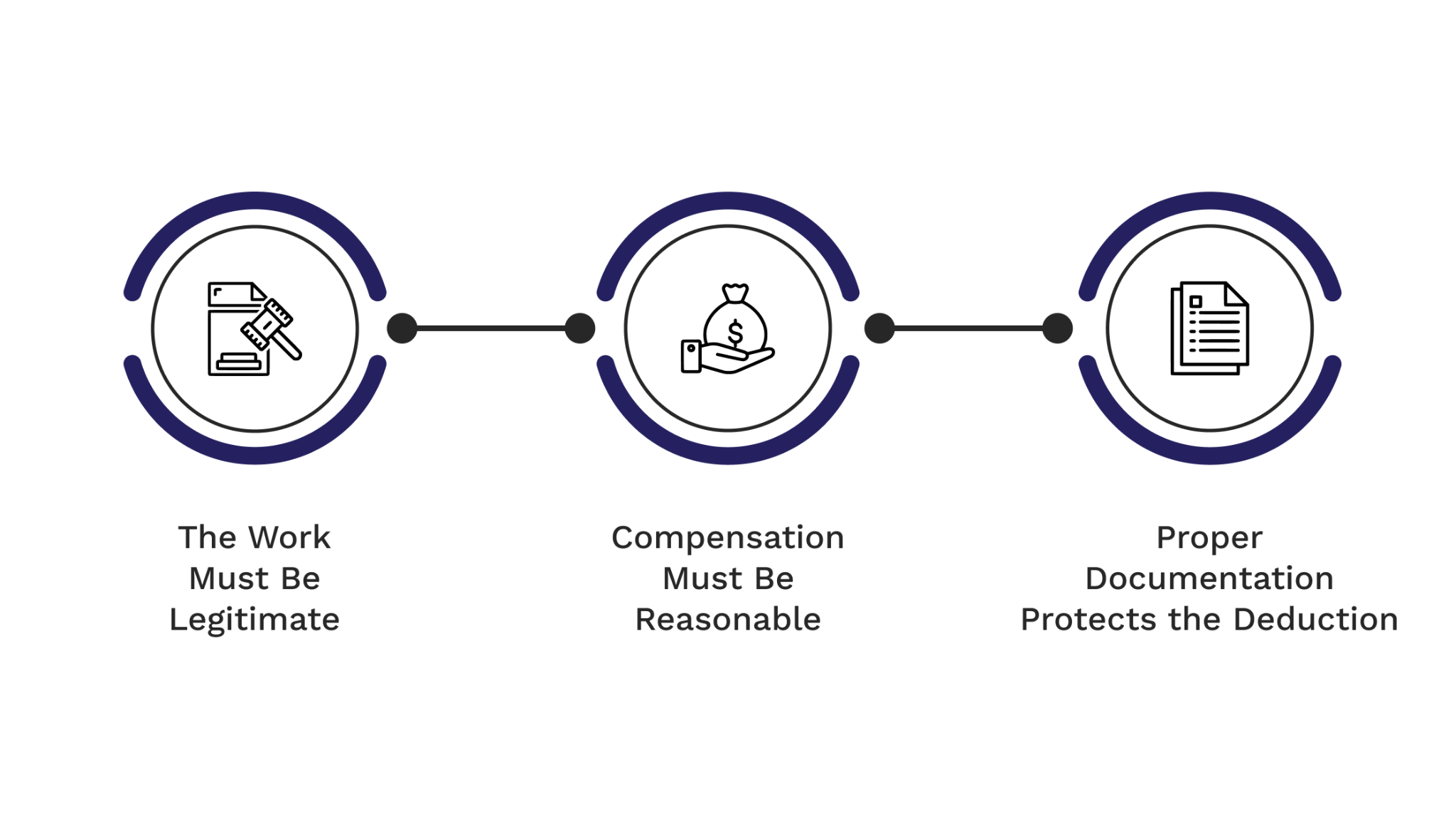
The Work Must Be Legitimate
The IRS requires payments made to your child to represent real work performed for your business. You cannot simply transfer money to your child and classify it as payroll. The focus is on the actual nature of the arrangement, not just how it is labeled.
For the compensation to be considered legitimate, the work should be:
- Ordinary and necessary for your business operations
- Age-appropriate based on your child’s abilities
- Actually performed and supported by records
- Reasonably compensated based on the work completed
Examples of Legitimate Work Your Child Can Perform
The type of work depends on your business, your child’s age, and their capabilities. Common examples may include:
|
Type of Work |
Examples |
|
Administrative Support |
Filing, organizing documents, scanning records |
|
Marketing Assistance |
Social media support, content assistance, promotional tasks |
|
Office Support |
Organizing supplies, inventory assistance |
|
Creative Work |
Photography, website content, promotional materials |
|
Technology Support |
Data entry, software organization, basic technical tasks |
For example, paying a ten-year-old as a “Director of Operations” with a six-figure salary is unlikely to appear reasonable, just as paying a two-year-old to clean the office would not be considered age-appropriate. The younger your child is, the more carefully the responsibilities should be matched to their age and skills.
Compensation Must Be Reasonable
A legitimate tax deduction requires compensation that reflects the actual value of the work performed. Many business owners make the mistake of starting with a tax goal, such as:
“How much can I pay my child to maximize the deduction?” The better approach is to determine compensation based on:
- Hours worked
- Responsibilities performed
- Market rates for similar work
- The actual value the work provides to your business
If you would not pay the same amount to an unrelated employee performing identical duties, the IRS may challenge the deduction. The purpose is not simply to move income to your child. The purpose is to create a legitimate employment arrangement that supports your business.
Proper Documentation Protects the Deduction
Even when the work and compensation are legitimate, poor documentation can create unnecessary problems. Maintaining clear records helps demonstrate that the arrangement follows IRS requirements. A well-documented arrangement should generally include:
- Written job responsibilities
- Employment agreements
- Payroll records
- Time tracking records
- W-2 reporting
- Compensation documentation
- Evidence of completed work
- Documented fair market wages for comparable work
Proper documentation helps separate legitimate tax planning from unsupported deductions and provides stronger protection if the IRS reviews the arrangement.
Major Considerations When Paying Your Child Through Your Business
Proper Payroll Reporting Is Essential
If your child performs legitimate work for your business, the payment should generally be treated like employee wages. Proper payroll reporting, including issuing a W-2, helps establish:
- Legitimate earned income
- Payroll compliance
- Compensation records
- Potential Roth IRA eligibility
Avoiding payroll requirements can make the entire arrangement harder to support if reviewed by the IRS.
Paying Your Child Can Support Long-Term Wealth Planning
One often-overlooked benefit of paying your child through your business is the ability to generate earned income that may support future financial planning.
Because Roth IRA contributions require earned income, properly documented wages allow your child to begin building retirement savings early. For many business-owning families, this can become part of a broader multigenerational wealth strategy.
Business Structure Determines the Tax Rules
The rules for paying family members in a small business depend on your business entity. Certain payroll tax benefits may apply to:
- Sole proprietorships
- Partnerships owned only by the child’s parents
Understanding your entity structure is essential before implementing a child payroll strategy.
Building a Strategy That Meets IRS Requirements
Paying your child through your business is not a hidden loophole. The IRS recognizes this strategy and focuses on whether the arrangement follows the rules. Following the child payroll tax rules helps create a defensible strategy while reducing unnecessary audit risk.
Build a Tax Strategy That Supports Your Business and Family Goals

Paying your child through your business can be a legitimate planning strategy, but success depends on how the arrangement is structured.
The goal is not to find a shortcut or create an unsupported deduction. The goal is to build a legally defensible strategy that supports tax efficiency, family planning, and long-term wealth objectives.
Through its Strategic Planning Counsel for Business Owners™ framework, Dahl Law Group helps business owners align their entity structure, tax planning, payroll strategies, and long-term family wealth goals into a single coordinated approach.
FAQ
A child tax benefit generally refers to tax advantages available to parents or guardians who support qualifying children. These benefits are separate from wages paid to a child through a business.
Yes. You can pay your child a salary if they perform legitimate work, the compensation is reasonable, and payroll requirements are properly followed.
Yes, wages paid to your child qualify as a business deduction if they meet IRS requirements for ordinary and necessary expenses, just as paying any other employee would.
Child payroll tax rules depend on your business structure, your child’s age, and ownership details. Sole proprietorships with parents as owners, or partnerships with only parents as owners, will not require payroll taxes to be paid on the wages of the child.
Yes. Properly structured payments can support income planning, earned income opportunities, and long-term wealth strategies.

Dahl Law Group
Latest posts by Dahl Law Group (see all)
- 7 Asset Protection Strategies California Business Owners Must Consider - August 14, 2026